
It's About Time
An essay that barged through the door late at night and insisted on being written. It started with fading memories and the slow flow of the war days, in which little happens and some die.

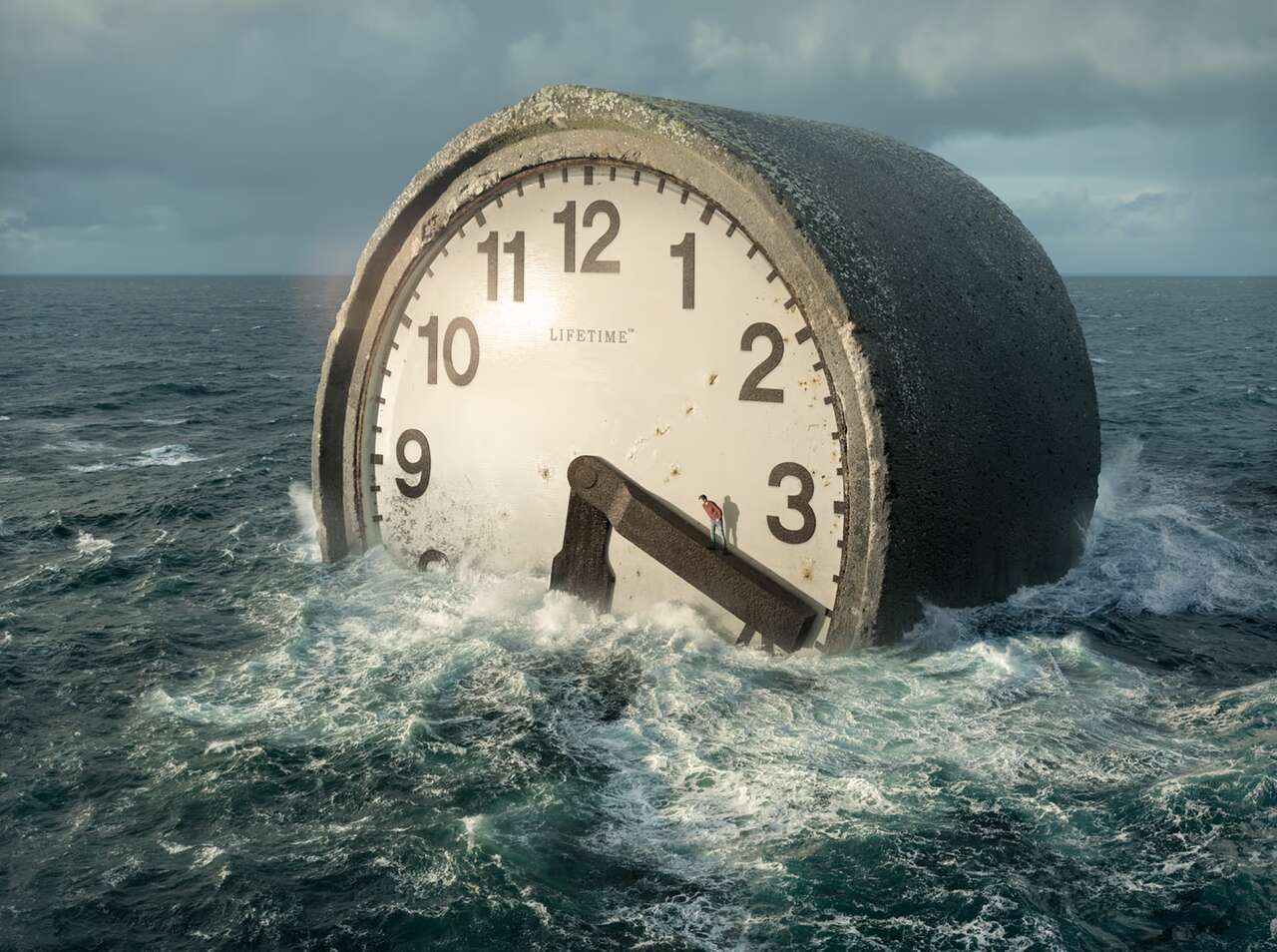
Lately I have that heavy feeling of time seeping through my fingertips, that I am getting older faster and faster; that the worst parts of history are repeating themselves; that life is changing relentlessly. In the same breath, there is a sense of urgency to collect my fading memories like the clothing on the line just before the rain.
How we lost time
It must have been 1994 or so. The only thing I really remember is the beep of the watch. And the wrist to which the watch was attached. The owner of the wrist and the rest of the story’s protagonists were sitting in the meeting room in the British Embassy in Sarajevo. The embassy was a surprisingly humble, smallish Austro-Hungarian private house, whose outside walls were crumbling even before the war started. It was in one of those narrow streets parallel to Titova, up Dalmatinska, then left. One of those streets that hang on the steep slopes for their dear lives. The house was tucked in, close to everything but hard to reach by grenades or snipers. That was much appreciated by the employees and rare visitors.
We did not have many visitors to the Embassy, or maybe I was not paying attention. We had some high-ranking people here and there, or random characters like the owner of the beeping watch and the wrist. He was a young World Bank type who came dressed in the World Bank attire - a sharp suit and a sharp white shirt. He must have had a tie. It would not do without a tie. What he was doing in those war years in Sarajevo is a mystery - World Bank and such are future-forward institutions as they call those nowadays, but there was no future on the horizon in those dark years, now that I think of it, there was no horizon either.
Why I would be in this meeting is another mystery, unless there was some talk about arts and education, as that is what I was working on as a sole employee of the British Council. It is more likely the Ambassador invited me to help him survive a well-meaning and annoying foreigner. Whatever you think about ambassadors, not that we think about them much, ours, Robert and Bryan, were smart and funny. They both quickly adapted to our Barbarian ways, accepted the war situation as is, and appropriately rolled their eyes at their American counterparts, who looked more like extras in a war safari with bulging bulletproof vests, barbed wires and a wide compound.
Whatever was said at that meeting mercifully died and was buried below anyone’s memory. The only surviving moment is when the World Bank’s watch beeped at a quarter to the full hour. “It is time to wrap up,” he said all businesslike and serious, so that, obviously, the time would not be wasted. Yes, we all solemnly nodded, as if we had to go somewhere or do something. Yes, I joined the pretense, taken aback by his time efficiency, by the watch beeping quarter to in the middle of the war, in a besieged city. Of course, I understood that he could not know that we lived in the Country of the Last Things, as I came to call it after reading Paul Auster’s book.
He could not have known that time moved differently, we lived in the now, just as the good Buddhists would want us all to. Our time horizons were low; the past was limited to a couple of vague memories, because it was too painful to think that once upon a time we lived normal lives; and the future could fit in a Turkish coffee cup and consisted of our ambitious planning like “Which is the safest way to get home? How much flour do we have?” There was nothing to “wrap up” in our lives and no action items. Around 4-5 pm we leave the security of the embassy, check on the current bombing and snipers before we decide on the safest route, walk-run to our homes, stop at the neighborhood market to exchange cigarettes for food, and then fall back into the slow flow of the war days, in which little happens, and some die.
What was he thinking, the World Bank person? Did coming to Sarajevo in the middle of the war sound like a good project to add to his resume? Did his ambition convince him that he could become an expert on the Countries of the Last Things and get himself a job with the UN or USAID? In ten years, I can see him at a conference in Geneva, and he teaches us how not to fight wars in 45 minutes, and in the last 15 minutes we will vigorously engage in Q&A.
We, the residents, gave up on watches and clocks a long time ago. Our time was marked by when the power or water came back on, and it was measured by the length of the waiting line: bread, water, food aid, my father’s food packages through ADRA or Catholic Charities.
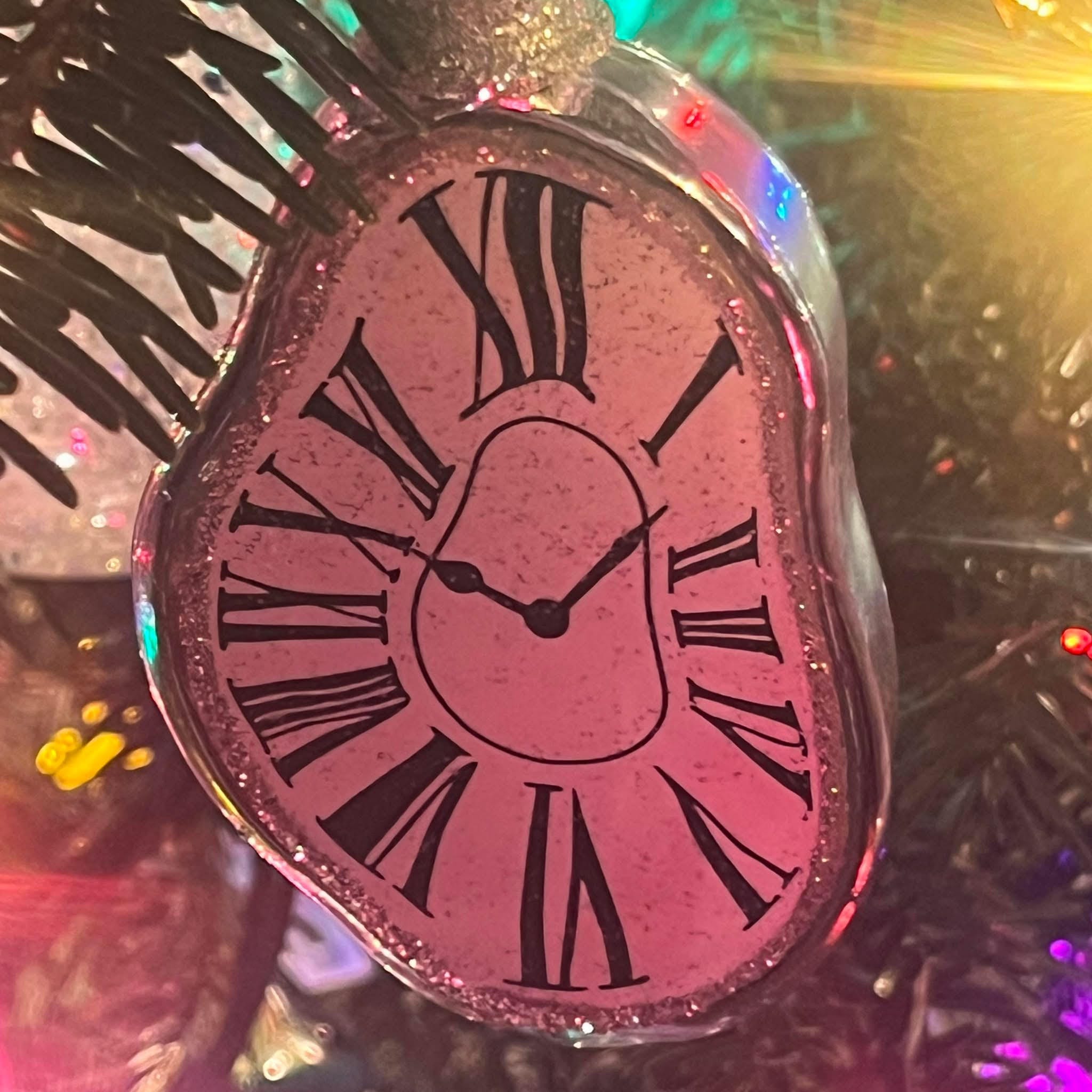
As if Dali painted it just for us, time morphed from a ticking instrument into a game of probability. The longer you stayed in Sarajevo, the higher the chance that you would be grazed, wounded, or killed by shrapnel or a bullet. We developed a keen sense of how this probability was increasing against us with mathematical precision and statistical indifference.
Every working day at the embassy, we faced the same calculation: When do I leave, and which road do I take? Leave at 5:00 p.m. sharp, and a bullet may find you. Leave at 5:05, and it misses you. Or the other way around. You never know.
So how do you make the best choice?
You don’t. You believe in Fate, because there is nothing else to believe in. That’s how we dealt with problems with no solution there, in the Country of the Last Things.
I talked about it one afternoon with Dr. Radeljkovic, my college professor, as he was leaving the embassy. I asked him which way he would go home, as we had just heard that there was heavy bombing close to the Presidency, in his neighborhood.
He looked at me through his thick glasses and, without hesitation or doubt, said, “I will leave now and go the way I always go, and that’s it.”
I still remember his briefness and decisiveness.
You cannot think yourself out of this probability.

A wonderful evocation of wartime time - thank you. "The slow flow of the war days, in which little happens, and some die." I appreciated your professor's succinct and astute comment as he left the embassy, understanding fate so beautifully. Remember when our friend Gwen and I came to Sarajevo just after the war kind of ended to do an English teacher training and stayed at the ambassador's very modest flat? Such a lovely, unassuming man, and you're right, a very unassuming embassy! We happened to be there the night the streetlights came on, miraculous it seemed - walking those stairs to the embassy was treacherous in the dark - and everyone was out and about, celebrating.